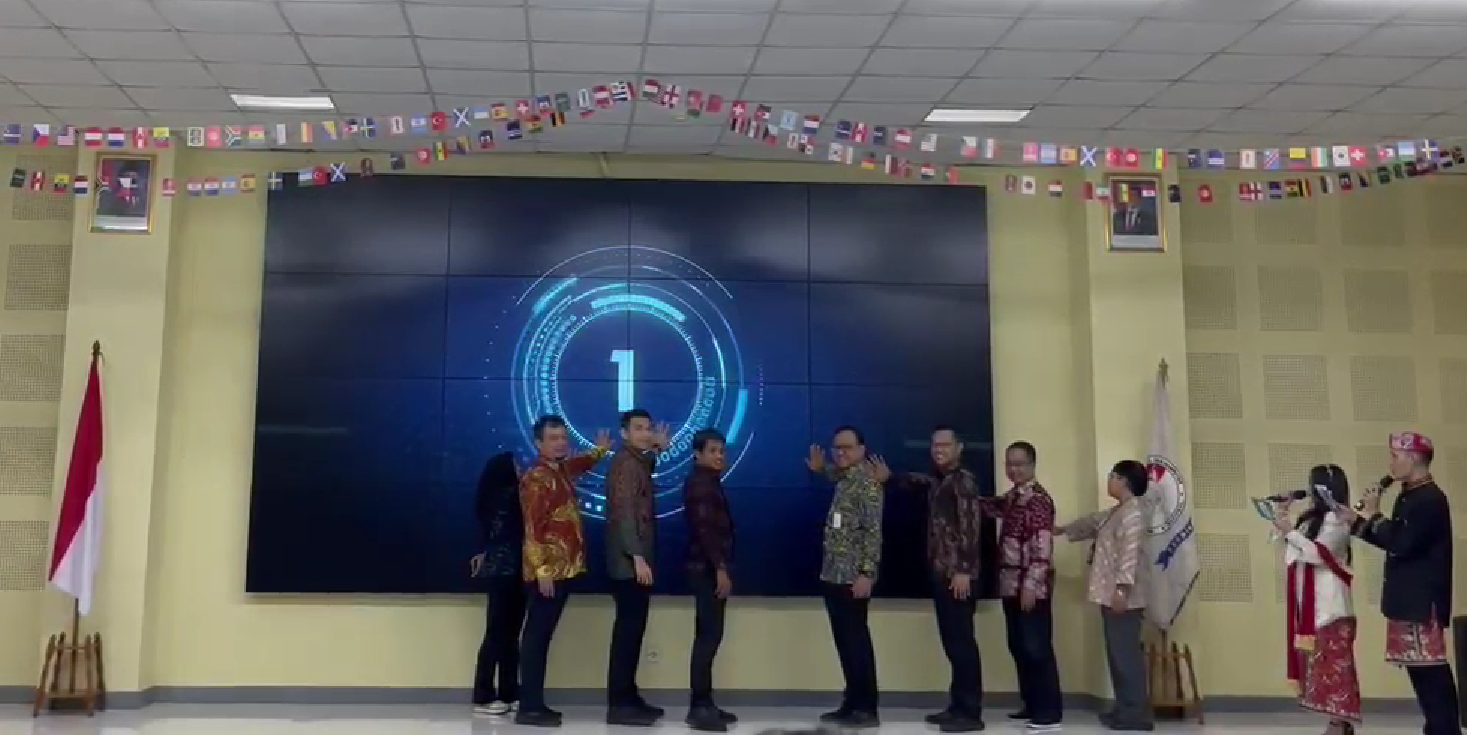
Alleged Data Breach Hits Multiple Indonesian Universities, Sparking Public Concern
Allegations of personal data leaks involving students from several universities in Indonesia have resurfaced, triggering widespread public anxiety. The issue gained traction after a Facebook user named Matt Murdrock uploaded findings claimed to be evidence of database breaches from over a dozen universities. In his post, he shared screenshots allegedly containing sensitive information, including full names, Student Identification Numbers (NIM), email addresses, and account passwords.
The data is reportedly being traded on the dark web, highlighting the fragile state of cybersecurity within academic institutions. Student data holds high economic value and is a frequent target for digital crimes, ranging from online fraud and illegal gambling to sophisticated social engineering schemes. This situation leaves students as a highly vulnerable group within the rapidly evolving ecosystem of cybercrime.
Data breaches in higher education are not a new phenomenon. The swift digitalization of campuses often lacks the necessary commitment to adequate data protection. While academic systems are built for efficiency, the critical aspects of security and data sovereignty for students are frequently overlooked. Ideally, universities should serve as safe havens for knowledge development; however, weak digital governance has turned campuses into vulnerable data repositories.
In many instances, institutional responses to these breaches remain defensive and normative, prioritizing reputation management over accountability. Students are rarely treated as the rightful owners of their personal data. Consequently, the rights to transparency, protection, and recovery from such leaks are often sidelined, despite the potential for long-term misuse of the compromised information.
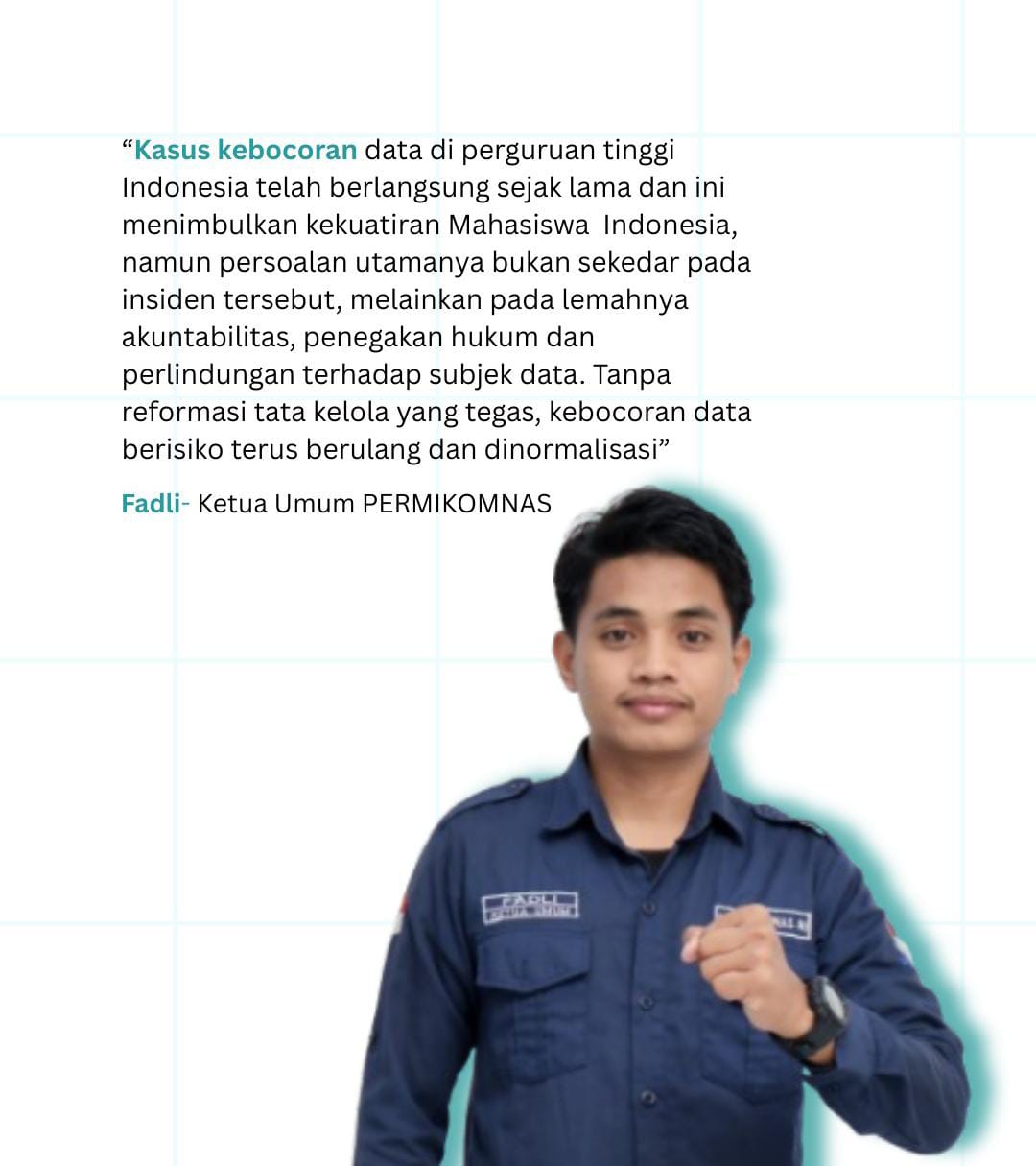
The issue has drawn sharp criticism from student organizations. Fadli, the General Chairman of the National Association of Informatics and Computer Students (PERMIKOMNAS), described the breach as a major failure in university digital governance.
“The leakage of student data is a serious failure in campus digital management. Students are the rightful owners of their personal data. When that data is compromised and the institution fails to provide protection or transparent explanations, it is not just the system that breaks—trust is also destroyed”, Fadli stated.
He further noted that the defensive stance taken by many universities indicates that student data safety is not yet a top priority. “Campuses often focus more on damage control for their reputation than on protecting students as data subjects. In reality, leaked data can be exploited for scams and organized digital crimes,” he added.
Fadli emphasized the necessity of state intervention to ensure the accountability of educational institutions. “This is not merely a technological issue; it is a matter of digital justice. Without strict law enforcement and transparent evaluations, these breaches will continue to recur, and students will perpetually remain the victims,” he concluded.
Related News
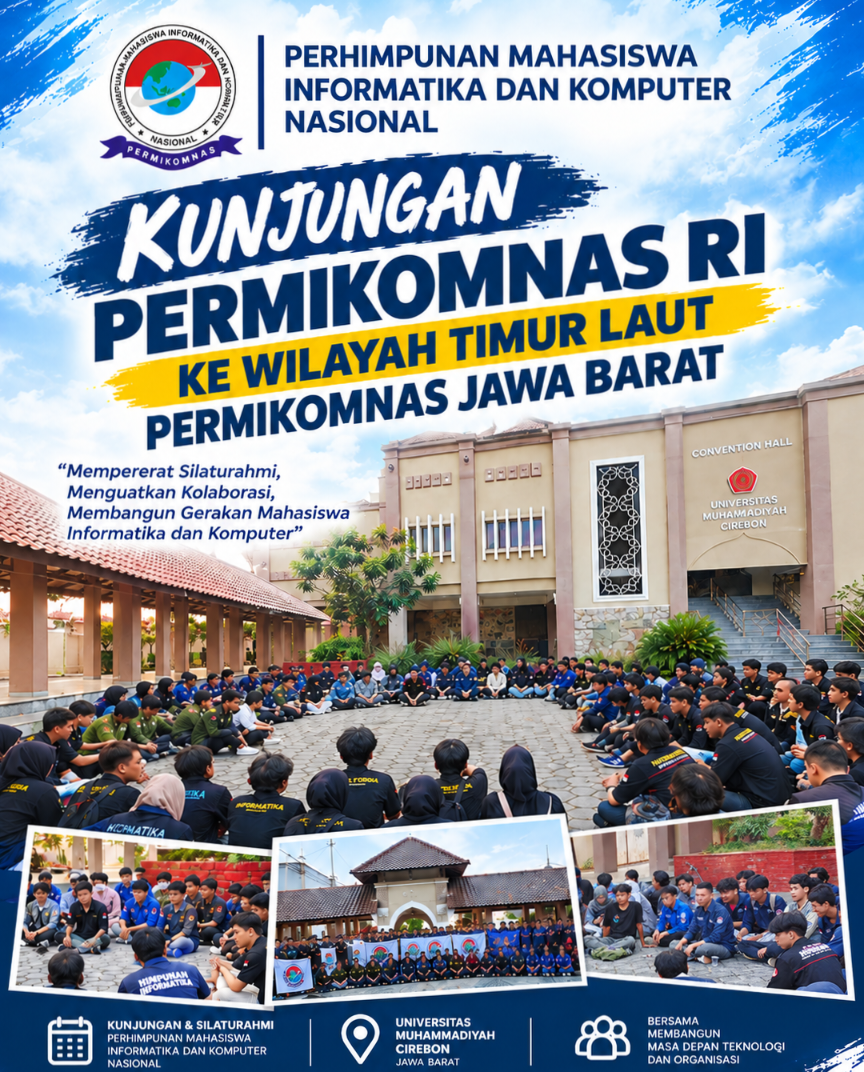
Working Visit and Hearing Meeting of BaKorNas PERMIKOMNAS RI with PERMIKOMNAS Northeast West Java

Audience of PERMIKOMNAS RI with the Deputy for Youth Empowerment of the Ministry of Youth and Sports of the Republic of Indonesia